Wardogs, Why the T-72 Tank Feels Unkillable and What Actually Damages It
Want articles like this for your own video to promote it on YouTube and Google? Order them through the Telegram bot @sat_sit_bot. Articles with your video embedded are written and posted by the bot itself — on popular topical sites (no ads). Free trial — 50 articles.
· based on the channel Josephant
Key takeaways
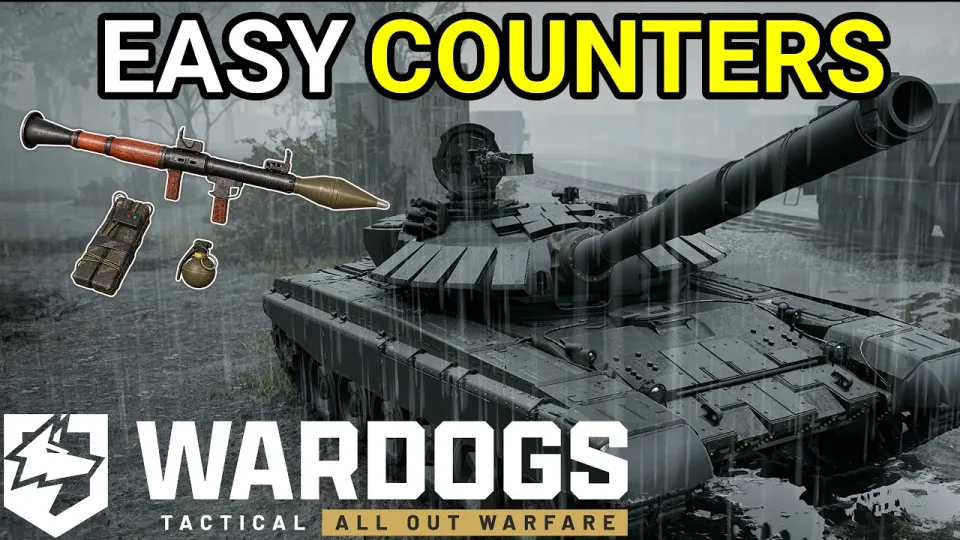
- The T-72 in Wardogs is not invincible: RPG hits, C4 placed on the hull, grenades dropped on the engine deck and armed helicopters all damage it.
- A common complaint is that a missed RPG can deal more damage than a direct hit, which makes the armor feel inconsistent rather than overpowered.
- Third-person view on the T-72 lets the driver spot infantry sneaking along walls before the infantry can see the tank.
- Tanks are loud and visible from roughly 150 meters, so a stationary, patient player can often let armor roll past instead of fighting it.
- Tanks unlock early in a match while armed helicopters are gated behind a point threshold, which is the core of the balance argument.
The T-72 in Wardogs is not unkillable — it is just unforgiving to attack without the right tool and the right angle. RPG hits, C4 planted on the hull, grenades landing on the engine deck and armed helicopters all damage it, while a lone infantryman firing an RPG from the open usually dies before the second rocket is loaded. The tank feels overpowered because most players meet it in the worst possible conditions, not because it has no counters.
What actually damages a Wardogs T-72
Four weapon types reliably hurt the T-72, and each one has a different risk profile. The list below is the practical order of usefulness for a solo player.
- C4 on the hull. Planting explosives directly on the tank does consistent damage and does not depend on impact angle. The catch is getting close enough to place it, which is where the third-person camera problem appears.
- Grenades on the engine deck. Thrown from further away than C4 can be planted, grenades are the most forgiving option for infantry without anti-tank gear.
- RPG hits. A rocket that connects does real damage, but the reload window is long enough for the tank to turn its turret and finish the shooter.
- Armed helicopters. Air support is the cleanest hard counter, but it is gated behind a point threshold, so it is not available when tanks first appear.
Light vehicles are not a counter. A Humvee's weapons do far less to armor than an RPG does, and trading a Humvee for a tank is a losing exchange every time.
Why RPGs feel broken against the T-72
The most repeated complaint about Wardogs armor is that a rocket which misses can register more damage than one that hits. That is a consistency problem in how splash and impact are calculated, not proof that the T-72 has too much health. When the feedback from a weapon is unreliable, players stop trusting the RPG and stop carrying it, which then makes tanks look stronger than they are.
Two practical consequences follow. First, do not judge a rocket by whether it visually connected — check the damage numbers and adjust. Second, treat the RPG as a finisher rather than an opener: fire when the tank is already distracted by another squadmate, or when it is reversing and the driver's attention is on the route rather than the flank.
The third-person camera problem
A tank driver in third person can see infantry hugging a wall before that infantry can see the tank. Sneaking up on armor is therefore much harder than the map geometry suggests, and once a driver spots a flanker, the T-72 simply drives away — infantry on foot cannot chase it down. This is why grenades thrown from range outperform close-quarters ambushes: the throw distance is longer than the distance at which a tank reliably notices a single player.
Sound works both ways. Armor is audible from roughly 150 meters, so a player with no anti-tank gear should hide and let it pass rather than reveal a position. Patience is a legitimate tactic against a vehicle that cannot see through walls but can hear an engine and spot movement in a wide cone.
Why tanks are available on day one
A large part of the frustration is not about damage numbers at all — it is about timing. Tanks spawn early in a match, while armed helicopters wait behind a point threshold. For the first stretch of a game, the only hard counter to armor is another tank or a lucky C4 run, and public lobbies rarely coordinate that.
Military doctrine says tanks should roll with infantry support, and that logic holds in Wardogs: a T-72 with a few players watching its flanks is genuinely difficult to kill, while a lone tank is a free kill for anyone with C4. The problem is that public matches rarely produce that escort, so the vehicle's power depends entirely on which team happens to cooperate. The common suggestion — gate tanks, heavy artillery and attack helicopters behind the same point threshold — targets exactly this mismatch.
Typical player questions about Wardogs tanks
"When I drive a tank, ten enemies have RPGs. When the enemy drives one, nobody on my team does." This is a perception issue as much as a balance one. Players remember the deaths and forget the kills, and a tank that is spotted and stationary attracts every rocket on the map. Mobility and cover matter more than armor value.
"Is leveling the driver worth it?" Many players report the driver role feels fragile and stop investing in it. The trade-off is real: a leveled driver survives longer, but the vehicle still dies to two coordinated rockets, so the progression does not change the fundamental risk of sitting still.
"Should I fight a tank at all as recon?" Often no. If you carry nothing that damages armor, hiding and reporting the position is more valuable than a suicide run. Players who do engage successfully tend to do it with grenades from range rather than a close approach.
"Is the T-72 actually too strong?" The honest answer is that it has counters, but they are gated, inconsistent or require teamwork. That combination produces a vehicle that is fine on paper and frustrating in a random lobby.
Bottom line on the Wardogs T-72
The T-72 is not invincible, but it is badly tuned for public play: its counters exist, yet the RPG behaves inconsistently, the third-person camera punishes flanking, and helicopters arrive too late to matter early. The fixes players ask for are modest — reliable rocket damage and a shared unlock threshold for tanks, heavy artillery and attack aircraft. Until then, C4 on the hull and grenades on the engine deck remain the most dependable answers for infantry. The breakdown that sparked this discussion, including the RPG and C4 tests, comes from the channel Josephant, whose Wardogs armor and base-building guides are worth following for players who want the numbers rather than the complaints.
Source: Why Everyone Hates the T-72 Tank in WARDOGS · Markdown version
Questions & answers
Can one infantry player destroy a T-72 in Wardogs?
Yes, but not with a single RPG from the open. The realistic solo route is C4 planted on the hull or several grenades on the engine deck, ideally while the driver is distracted. A lone RPG shooter usually dies during the reload.
Why does a missed RPG sometimes deal more damage than a hit?
Damage registration against armor is inconsistent, so splash from a near miss can out-damage a direct impact. Treat the numbers, not the visual, as the source of truth, and expect the RPG to be unreliable rather than a guaranteed kill.
Are armed helicopters the best counter to tanks?
They are the cleanest hard counter, but they unlock behind a point threshold while tanks appear much earlier. That timing gap is the main balance complaint, and the common proposal is to gate tanks, heavy artillery and attack helicopters at the same threshold.
How do you sneak up on a tank with a third-person camera?
You mostly cannot, because the driver sees over walls before you see the tank. Use longer throw distances with grenades, approach while the tank is moving or reversing, and rely on sound — armor is audible from about 150 meters, so a quiet player can often let it pass.